
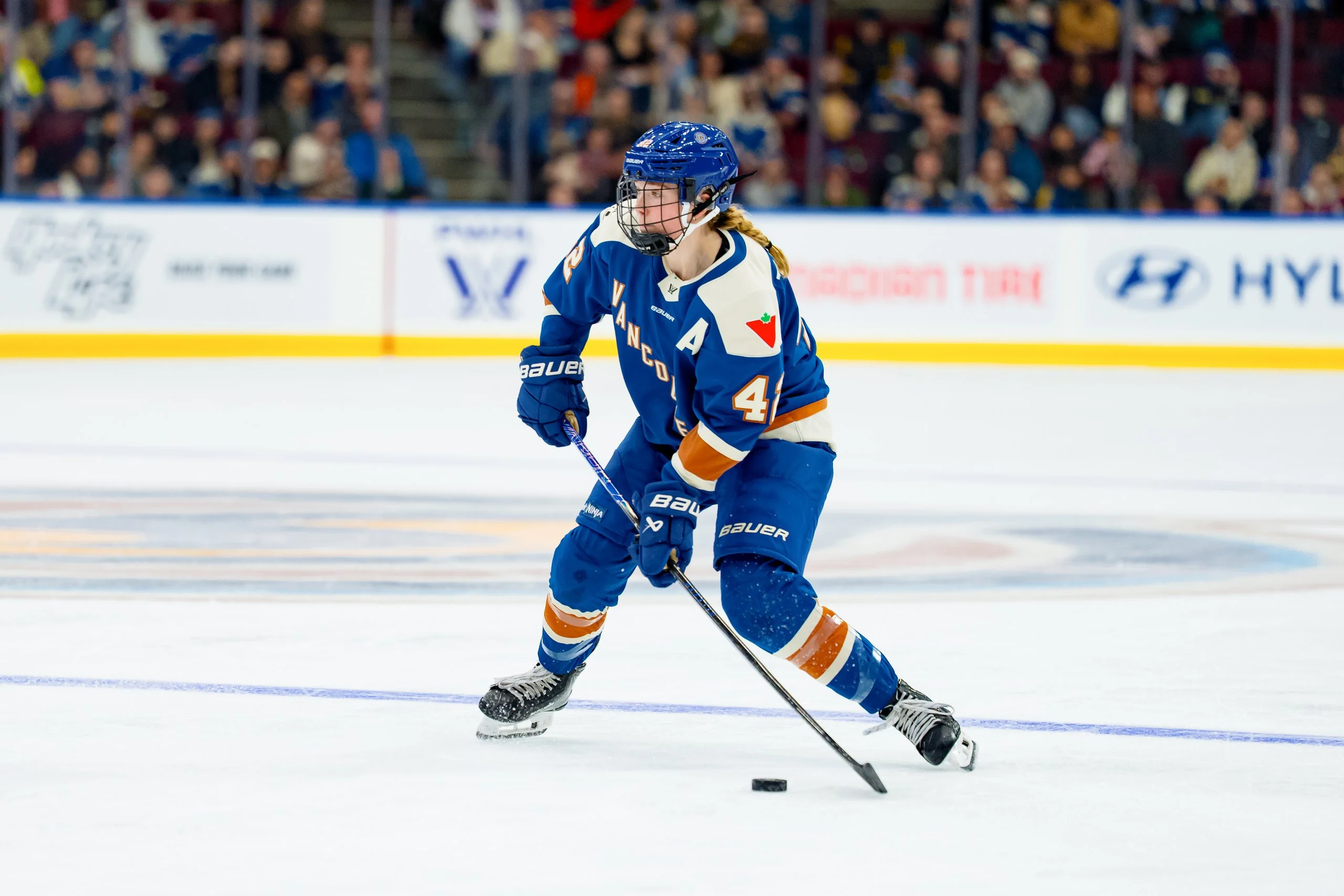
MONTRÉAL, QC. – Claire Thompson, the 28-year-old defender from Toronto, announced her retirement from professional hockey last weekend to return to medical school and continue medical school. After three World Championships, two Olympic Games including one gold medal and two seasons in the PWHL, including winning the Walter Cup with the Minnesota Frost in the 2024-2025 season, she’s leaving leaving hockey with a résumé few athletes ever achieve and going back to her goal of pursuing a career in orthopedic surgery.
This brought up a bigger question online: “What happens when professional women’s hockey becomes a career capable of standing on its own?”
Up until three years ago, players often had to build another profession because hockey wasn’t financially sustainable as a full-time career. It wasn’t even always possible to continue playing past their respective university or college teams.
The arrival of the PWHL changed the game. It gave players not only one stable professional league across North America, but also the opportunity to play full time and be paid at a rate that could support them on its own. But many of the players who helped bring this new league to life already had careers of their own, from nursing to engineering.
The future of women’s sports is so unpredictable that they were coached from a young age to find something else that they were passionate about because hockey wasn’t considered a realistic career. It wasn’t a safety net or a second thought, it was the norm because even making the national team didn’t mean having a stable income. Players needed a second job that could accommodate their training schedule. Some were baristas, others were travel nurses in the off season but each knew that relying on hockey alone wasn’t really an option.
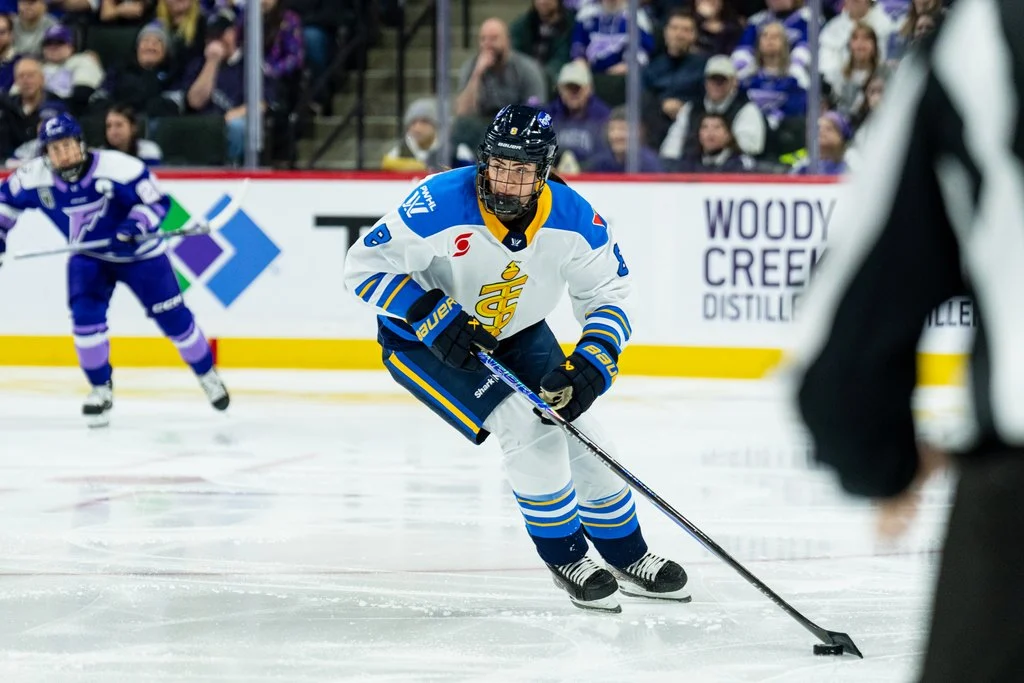
Younger players may now have the option to see professional hockey as a realistic primary career in a way previous generations often could not. But those already in the game often had to think about another career and create dreams of their own outside professional sport. That’s what ultimately led Claire to retire from the PWHL after two seasons.
She tried to juggle hockey and medical school together, hoping to stay in school in New York while playing for the local PWHL team when her schedule permitted her but it soon became clear that it wasn’t a feasible workload. She made the decision to pause her studies at NYU and declared for the 2024 PWHL Draft, joining the reigning champion Minnesota Frost. She helped her team win the Walter Cup that year before joining the Vancouver Goldeneyes through the expansion process, where she was later named an alternate captain.
In 2026, she joined Team Canada for her second Olympics, bringing home a silver medal and getting the chance to celebrate with her family, something she couldn’t do when she won gold in Beijing because of COVID-19 restrictions.
In her interview with The Athletic announcing her retirement, she said: “I have achieved far more than I could have ever hoped for and I feel like I’m ready to step away and continue on the long road ahead of becoming an orthopedic surgeon.”
Many of the players on the active or past rosters have had a similar experience of choosing between careers, Some had already finished their studies and could afford to prioritize hockey without knowing they would have to return to school for several years after retiring. Others did both at the same time, or eventually left the league to return to the careers they had initially planned for themselves. The connection to sport is still visible in some of those career choices with players opting for what could almost be considered the next best thing. Claire is one of those examples, mentioning that she wants to specialize in sports medicine, particularly as it relates to female athletes
Clair DeGeorge is a vascular nurse.
Sophie Jaques has a civil engineering degree.
Rachel McQuigge, a former goaltender for the Ottawa Charge during the inaugural PWHL season, is now a law student
Abby Boreen has continued her studies as a pharmacist while playing as a forward in the league.
Emma Greco has a bachelor’s degree in business and marketing
Erica Howe retired to return to her job as a firefighter in Mississauga, Ontario.
And that’s only to name a few.
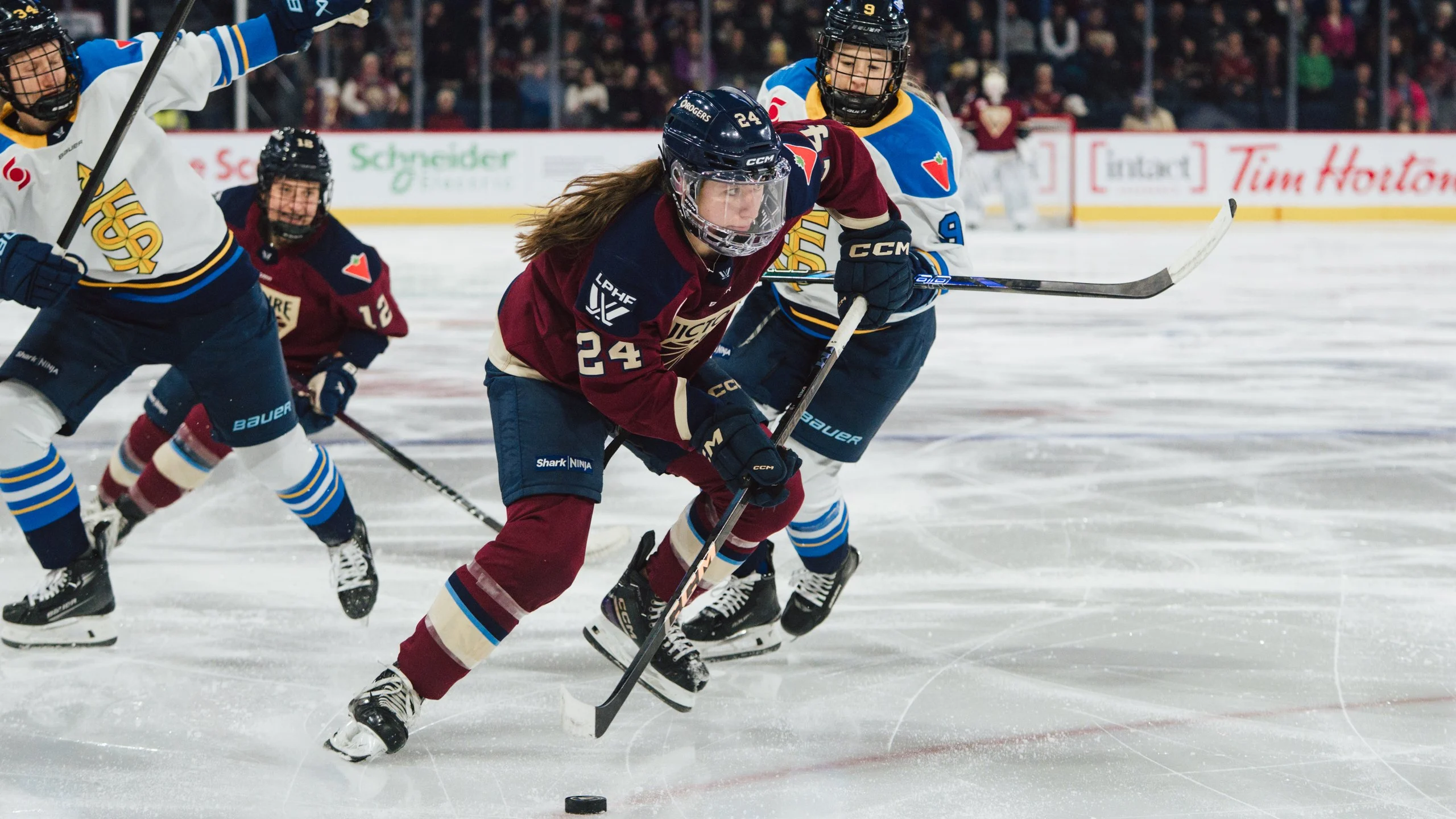
One of the realities of being an athlete is that, like most careers in sports, the prime of a playing career is relatively short. The salary players earn may sustain them during the years they are actively playing but it doesn’t necessarily mean they can stop working entirely once their playing career ends. They still have to have a plan for what comes next, whether they retire by choice, are pushed out by roster changes, or are forced to stop because of injury. It can’t really be a guessing game, and that makes their college and university years that much more important.
The biggest shift may be that younger players no longer have to build another career because professional hockey is impossible. Instead, they may be able to build one because they know hockey won’t last forever.
That’s a very different reality from the one the generation that built the PWHL grew up with.